
A little while ago, during an event with other community builders and social workers, there was a session on shinrin-yoku, or forest bathing.
I don’t know about you, but trying something new, especially a mindfulness practice that asks my mind to slow down or focus on one thing, can be stressful! Forest bathing was surprisingly okay. Walking slowly or sitting still for more than a few minutes was uncomfortable at first, but the forest’s movement gave my mind something to engage with. Compared to other mindfulness practices, I noticed my thoughts wandered a little less, and engaging different senses made it easier to refocus when they did. It actually felt good and restorative!
The Japanese phrase means “taking in the forest atmosphere” and has been associated with a range of physical and mental health benefits.
It is very simple: bathe, bask, or just hang out with the trees.
You can do it in the middle of a forest, your neighbourhood park, or under that one tree outside your apartment building. By yourself or in a group. For 10 minutes or for hours. It’s not a hike, there’s no destination or step count goal, but it’s also not meant to be a “just go touch grass” dismissal.
We spend so much of our working lives paying attention to other people, responding to what needs to be done and moving from one thing to the next. Forest bathing invites us to pause. To notice the light through the trees, hear the rustling leaves, and smell the crisp air.
It also got me thinking about how often I really pay attention to the places I move through every day.
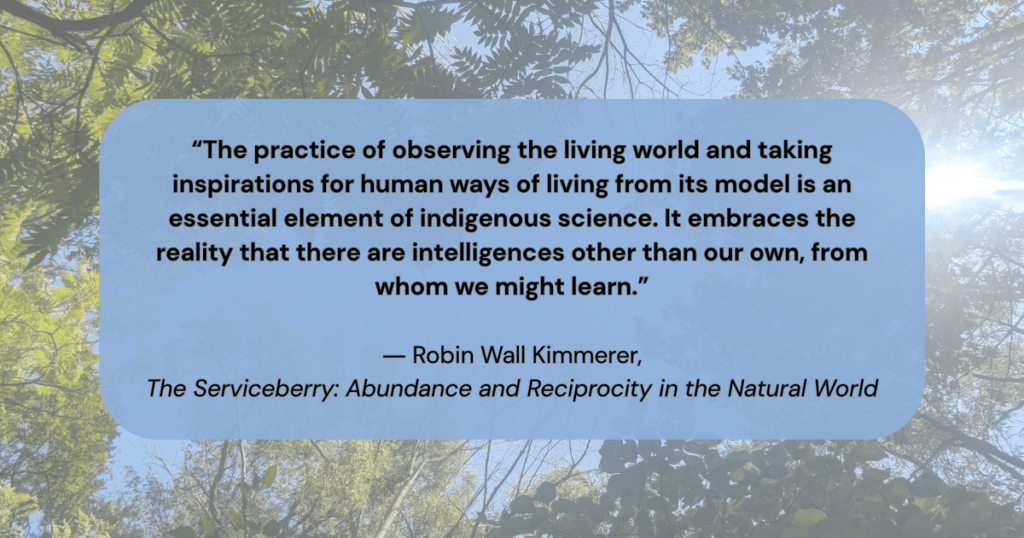
As we approach the National Day for Truth and Reconciliation on September 30, that feels worth noticing. This version of forest bathing isn’t an Indigenous practice, and spending time outside isn’t reconciliation. But the experience, alongside reading Robin Wall Kimmerer’s The Serviceberry, sparked curiosity about place and invited me to think more deeply about relationship, reciprocity and responsibility.
I invite us to try both: find a little time to slow down and be in nature, and intentionally listen to indigenous leaders about what might need to change in how we understand and relate to the land as a part of reconciliation.
For those of us who spend our days caring for others, both seem worth making space for as we strive to fulfill our mission and be a “transforming influence in the community.”
– Erin
Keep Learning: Truth & Reconciliation National Centre for Truth and Reconciliation offers resources and education for further learning. Last week they had daily lunch-and-learns, and the recordings are available to rewatch. The Salvation Army’s Indigenous Ministries Resources Robin Wall Kimmerer — The Serviceberry is a reflection on gift economies, reciprocity and our relationships with the natural world, through Kimmerer’s perspective as a botanist and member of the Citizen Potawatomi Nation. Phyllis Webstad’s story and the origin of Orange Shirt Day
|